
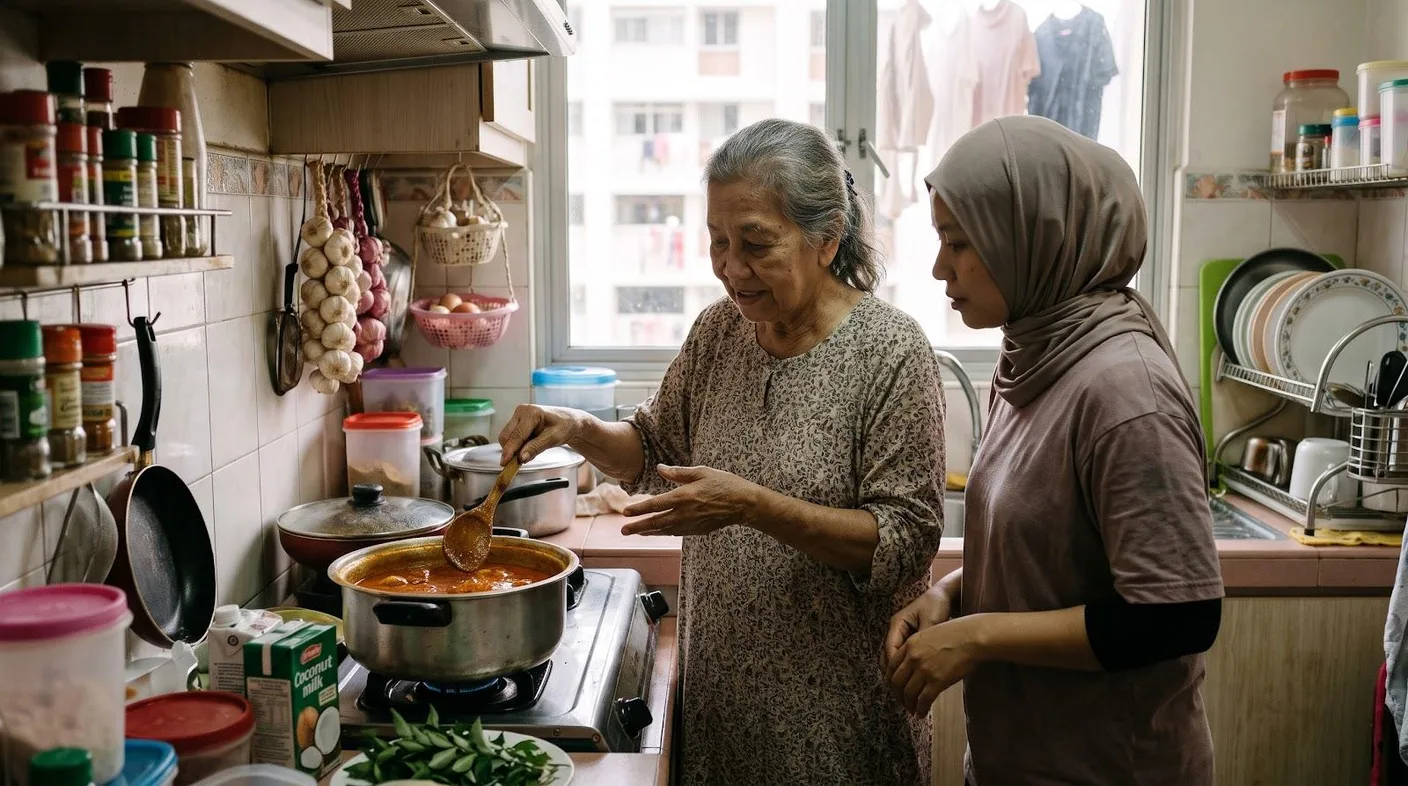
Families who search for a Muslim maid agency are usually asking for one of three things. Some need a helper who can talk with a grandmother who speaks only Malay. Some need a helper who is Muslim and will keep a halal kitchen as a matter of habit. Many need both, and a few simply want someone who can cook the food the family eats.
Each of those briefs points to a different shortlist. A helper can be Muslim and speak very little Malay, or speak good Malay and not be Muslim. An agency that hears "Muslim maid" and sends biodata by nationality alone may miss the point.
This guide sets out which source countries a Malay-speaking or Muslim migrant domestic worker (MDW) come from, how far Bahasa Indonesia goes in a Malay-speaking home, the questions to ask at the interview, and how to match her to the people she will spend her day with.
Quick answer: where to start
Decide first whether you need Malay as a language, Islam as a shared practice, or both. Most candidates for either come from Indonesia. Test her language and practice on the video call with specific questions, and match her to the person she will spend most of her day with.
Malay-speaking, Muslim or both: which brief are you writing?
Write down the requirement before you read any biodata. A language brief is about who she must talk to and how well. A faith brief is about how she will run the kitchen, pray and fast. The two often overlap, but not always, and an agency can only shortlist accurately when it knows which one matters most.
A useful way to separate them is to ask who in the house needs what from her.
- An elderly parent who speaks mainly Malay: A language brief; Whether she can hold a relaxed conversation in Malay, not only follow instructions
- A Muslim family with a halal kitchen: A faith brief; How she has kept a halal kitchen before, in specific terms
- A Malay Muslim family with young children and grandparents at home: Both; Language with the grandparents, and practice that fits the household’s routine
- A family that wants Malay or Peranakan dishes cooked well: A cooking brief; Which dishes she has cooked before, and for whom
- A non-Muslim family hiring a helper who happens to be Muslim: A fit question; What she needs from the household, and what the household needs from her
The last row is more common than people expect. Many families who are not Muslim employ Muslim helpers, and the placement works when both sides have said what they need at the start.
If your household’s requirements are mainly about running a Muslim home, such as the halal kitchen system, prayer and Ramadan arrangements, our page on finding a helper for a Muslim household covers those arrangements in detail. This guide concentrates on sourcing, language and the interview.
Where do Malay-speaking and Muslim helpers come from?
MOM allows MDWs from 13 approved source countries and territories. For a Malay-speaking or Muslim helper, the practical candidates come from four of them: Indonesia, Malaysia, the Philippines and Myanmar. Indonesia has most candidates for both briefs, while the other three are narrower pools with specific strengths and limits.
MOM’s approved list is Bangladesh, Cambodia, Hong Kong, India, Indonesia, Macau, Malaysia, Myanmar, the Philippines, South Korea, Sri Lanka, Taiwan and Thailand. Every helper must be female, aged 23 to below 50 at her first application, and have at least eight years of formal education with a recognised certificate.
- Indonesia: Bahasa Indonesia is closely related to Malay, so everyday conversation usually works from the start; The large majority of Indonesians are Muslim; Supplies most candidates for both briefs. See our page on Indonesian helpers
- The Philippines: Not usually spoken; About 6.4% of Filipinos reported Islam in the 2020 census, concentrated in the Bangsamoro region of Mindanao; The route when you need a Muslim helper with strong English. Expect a longer search
- Myanmar: Not usually spoken; A minority; Muslim candidates do come forward, but rarely. Expect to wait rather than choose
Inter Great places helpers from Indonesia, the Philippines and Myanmar. For most families asking for a Malay or Muslim helper, an Indonesian candidate is where the shortlist begins.
Two points apply whichever country she comes from. Faith is personal, and there is no register of Muslim helpers, so the biodata is a starting point rather than a guarantee. MOM’s standard biodata form does include her religion and her food handling preferences, such as no pork or no beef, so read those lines first and then confirm them on the call.
How far does Bahasa Indonesia go in a Malay-speaking home?
For daily life, a long way. An Indonesian helper and a Malay-speaking household usually understand each other on the first day, because the two languages share most of their grammar and core vocabulary. The gaps are in particular words, accents and Singapore Malay expressions, and most helpers close them within a few months.
The words that cause confusion are worth knowing, because a misunderstanding can sound like rudeness when it is only vocabulary. "Kereta" means a car in Malay but a train in Indonesian. "Senang" means easy in Malay and happy in Indonesian. "Budak" is an ordinary word for a child in Malay, but in Indonesian it carries a much harsher meaning, so a helper may flinch at it until someone explains. A grandparent who uses older Malay terms or mixes in Singapore expressions will take longer for her to follow than a younger family member.
To test it, hold part of the video call in Malay, ideally with the family member she will speak to most. Ask her to describe her last household’s daily routine, and to explain how she cooks a dish she knows well. A helper who answers in full sentences and asks you to repeat a word she did not catch is in a good position. A helper who replies "yes" to everything may be following less than she seems.
If the person she will care for is an elderly parent, include the parent in the call even for five minutes. Whether they can laugh together tells you more than a language rating on a biodata.
What should you ask a Muslim candidate at the interview?
Ask what she does, not what she believes. Questions about how she prays at work, how she has kept a halal kitchen, how she fasts while working and what she needs from the household are practical and respectful. Her answers show how she will fit your routine, and they give her room to raise her own needs.
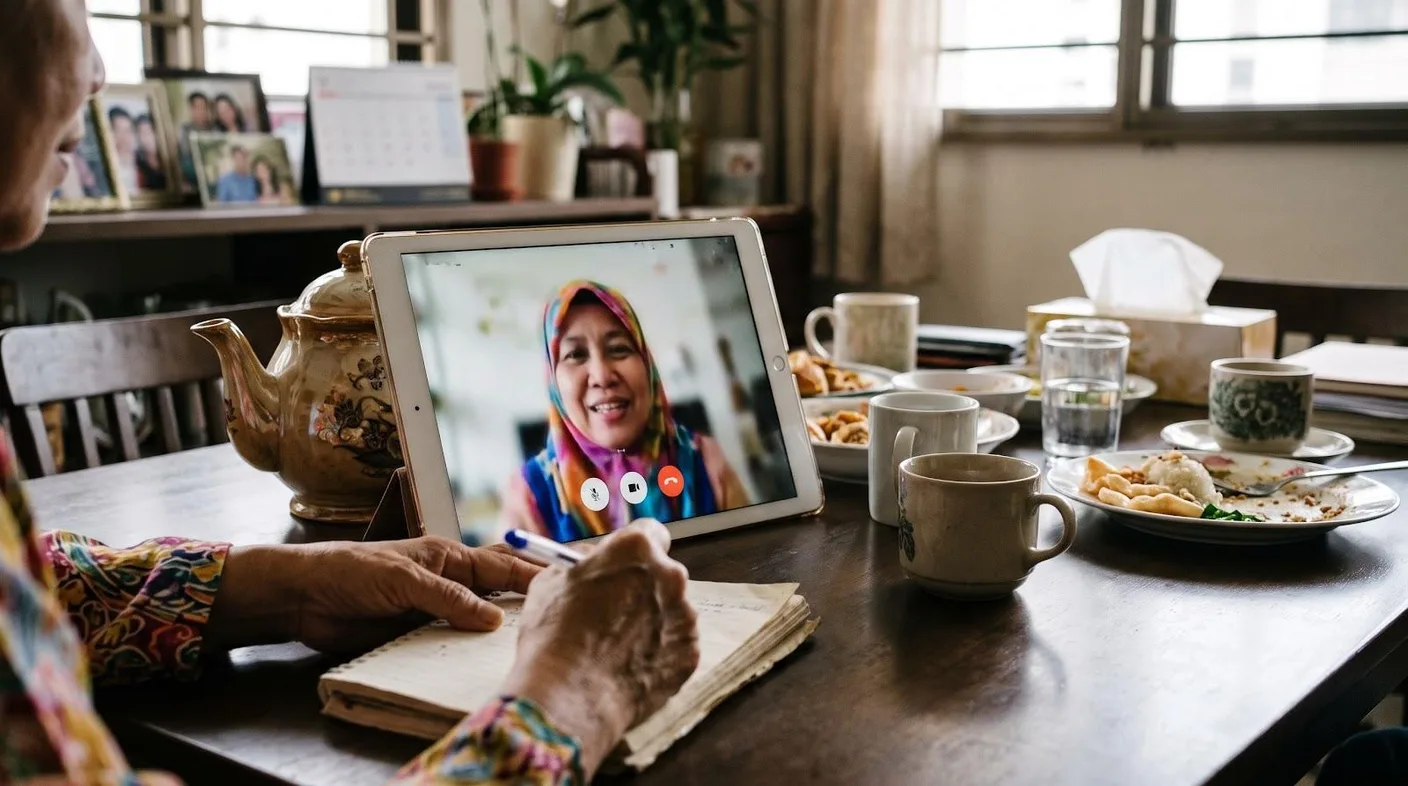
These questions work well on a video call, and the second column shows what a well-grounded answer usually includes.
- How did you pray in your last job, and where?: A specific place and routine, and how she fitted prayer around the children or an elderly person who could not be left
- How did your last household keep its kitchen halal?: Which utensils and boards were separate, how she checked labels when shopping, what she did when unsure
- How do you manage your work when you are fasting?: How she shifted tasks in the day, and what helped her through the late afternoon
- Have you cooked Malay or Indonesian dishes for a family? Which ones?: Named dishes and who she cooked them for, not "I can cook everything"
- What would you need from us to practise comfortably?: A clear, modest request, such as a quiet corner to pray or time on her rest day for a religious class
- Would you be comfortable in a home with a dog?: An honest answer either way. Many Muslim helpers prefer not to handle dogs, so ask before rather than after
How do you match her to your household?
Match her to the person she will spend most of her day with. If that is a grandparent, language and patience come first. If it is a young child, her experience with children and how she will support the family’s routines matter most. If it is a busy kitchen, her cooking and her halal practice lead to the decision.
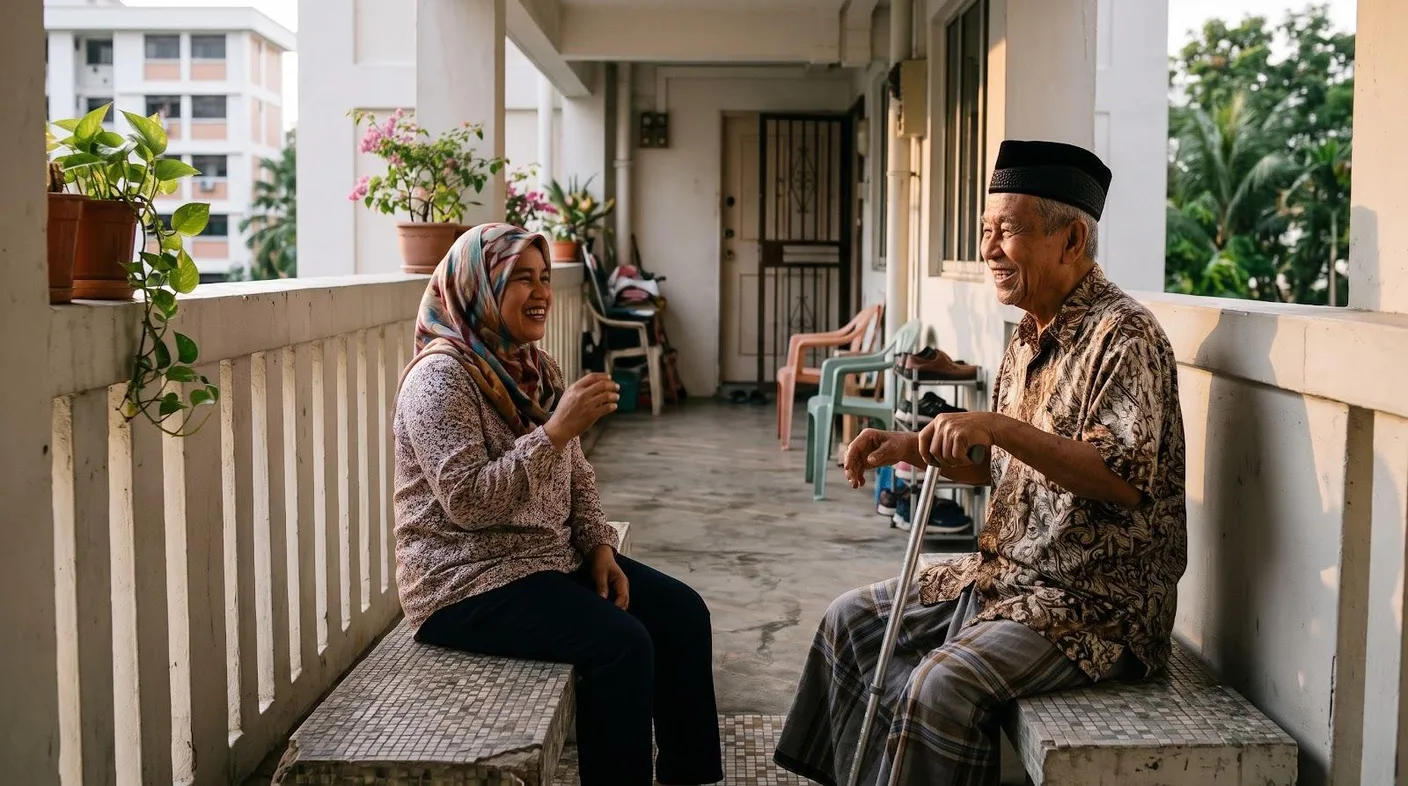
With an elderly parent. A parent who speaks mainly Malay is often happier with a helper who can chat with them, not only follow instructions. Ask about her experience with seniors in specific terms: the person’s age and condition, whether she helped them to stand or walk, and how she handled a difficult day.
With young children. She is not a religious teacher, and families should not expect her to be one. What helps is a helper who understands the family’s routine, such as prayer times, modest dress for the children, or getting them ready for religious classes, and who supports it without being asked each time.
In a mixed household. Where the household includes Muslim and non-Muslim members, agree whose instructions she follows on the kitchen and the routine. Contradictory instructions from different family members are a common source of strain in any placement.
Her rest day and festivals. Every MDW is entitled to one rest day a week, and at least one rest day a month that cannot be compensated away. The day is agreed between you and her. MDWs are not covered by the Employment Act, so public holidays such as Hari Raya Puasa are not an automatic day off. If Hari Raya matters to her, as it often will, agree at the interview whether she takes it as her rest day that week. Our guide to a helper’s rest days and working hours sets out the rules. MOM also reminds employers that a helper may not be able to eat certain food because of her religious beliefs, so plan meals she can eat as well as the meals she cooks.
First timer, experienced or transfer: how does the route change your search?
A narrow brief takes longer to fill, so the route matters. A first-timer helper from Indonesia gives the widest choice but the longest lead time. An experienced helper who has worked in Singapore before often knows Singapore homes and Singapore Malay. A transfer helper already in Singapore can be met sooner, but the pool at any moment is small.
The choice is a trade between choice and time, not a ranking.
- First timer. The widest pool for both language and faith briefs. She attends MOM’s Settling-In Programme as a first-time MDW, and you attend the Employers’ Orientation Programme if this is your first helper.
- Experienced. Has worked in Singapore or another country before. If her experience is in Singapore, she often already knows Singapore Malay expressions and local dishes, and her Singapore employment record can be checked.
- Transfer helper. Already working in Singapore and moving employers. She can start soon after approval, but the number available who match a specific Malay or Muslim brief in any one month is limited. Our guide to how a transfer works explains the process and what to check.
Whichever route you take, ask the agency how many candidates currently fit your exact combination of language, faith and skills, and how long the search is likely to take. If you are still comparing agencies, our page on choosing a maid agency in Singapore sets out what a licensed agency should do for you.
Summary
A Malay or Muslim helper starts with a clear brief: Malay as a language, Islam as a shared practice, or both. Most candidates for either come from Indonesia, with smaller pools in the Philippines and Myanmar. Read the biodata for her religion and food handling preferences, then test language and practice on the video call with specific, practical questions, and include the family member she will spend most of her day with.
Agree the arrangements that matter before she arrives, including her rest day and festivals, and match her to the person she will care for rather than to a nationality. If you would like help writing the brief and seeing candidates who fit it, speak to one of our consultants. Inter Great sends shortlisted biodata over WhatsApp and collects no fee before a helper is confirmed.
Get in touch with us today @ +6597766988. Inter Great Employment Pte Ltd (MOM EA Licence No: 14C6931). Follow us on Instagram and Facebook.
(Disclaimer by Inter Great: All above information and/or monetary figures are meant for reference only. Please refer to MOM’s official website for updated and accurate information, or approach and consult our recruitment consultant if you need professional advice and consultation.)
Frequently Asked Questions About Hiring A Malay Or Muslim Helper
Can an Indonesian helper speak Malay?
Most can hold an everyday conversation with a Malay-speaking household from the start, because Bahasa Indonesia and Malay are closely related. Some words differ in meaning and Singapore Malay expressions take time to learn, so test her on a video call with the family member she will speak to most.
Is it acceptable to ask about a helper’s religion at the interview?
Yes. MOM’s standard biodata form includes her religion and her food handling preferences. Keep the questions practical, such as how she prays at work and how she has kept a halal kitchen, rather than asking about belief itself.
Can a Muslim helper work in a non-Muslim household?
Yes, and many do. Ask at the interview whether she is comfortable handling pork,or living with a dog, and agree how the kitchen will be arranged. Some helpers will decline certain tasks, and that is better settled before she starts, and respect her religious belief & practices
Does my helper get Hari Raya off?
Not automatically. MDWs are not covered by the Employment Act’s public holiday rules, but every MDW is entitled to a weekly rest day agreed with her employer. If Hari Raya matters to her, agree at the interview whether she takes it as her rest day that week.